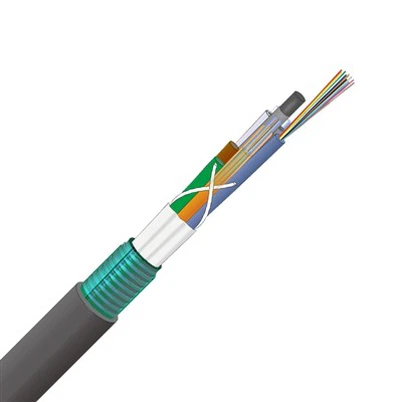
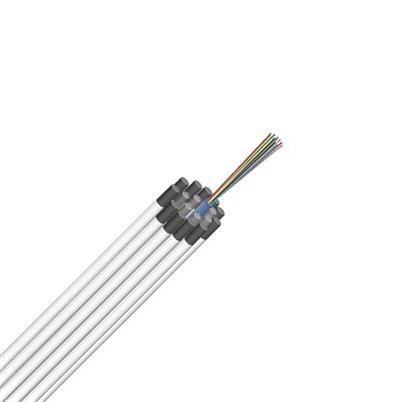
Introduction to single-mode optical fiber
Leave a message
Explanation of "Single mode fiber" in academic literature: Generally, when v is less than 2.405, only one peak passes through the fiber, hence it is called a single-mode fiber. Its core is very thin, about 8-10 microns, and the mode dispersion is very small. The main factors affecting the bandwidth of fiber transmission are various types of dispersion, and mode dispersion is the most important. Single mode fiber has low dispersion, so it can transmit light over a wide frequency band and a long distance.
Single mode optical fibers have a core diameter of 10 microns, which allows for the transmission of single-mode light beams and eliminates the limitations of bandwidth and modal dispersion. However, due to the small core diameter of single-mode optical fibers, it is difficult to control the transmission of light beams, requiring extremely expensive lasers as the light source body. The main limitation of single-mode optical cables is material dispersion. Single mode optical cables mainly use lasers to obtain high bandwidth, and since LEDs emit a large number of light sources with different bandwidths, material dispersion requirements are very important.
From a cost perspective, due to the high cost of optical transceivers, the cost of using single-mode fiber optic cables will be higher than that of multi-mode fiber optic cables.
Single Mode Fiber (SMF)
Compared with multimode fiber, single-mode fiber has a much thinner core diameter, only 8-10 μ m. Due to only transmitting one mode, there is no mode to mode dispersion, low total dispersion, and wide bandwidth. Single mode fiber is used in the wavelength range of 1.3-1.6 μ m. By appropriately designing the refractive index distribution of the fiber and selecting high-purity materials to prepare a cladding that is 7 times larger than the core, the lowest loss and minimum dispersion can be achieved simultaneously in this wavelength range.
Single mode fiber is used in long-distance, high-capacity fiber optic communication systems, fiber optic local area networks, and various fiber optic sensors.