

How does multi - mode optical fiber compare to other transmission media in terms of latency?
Leave a message

In the realm of data transmission, latency is a critical factor that can significantly impact the performance of various applications, from high - speed trading systems to real - time video conferencing. As a multi - mode optical fiber supplier, I have witnessed firsthand the evolution of transmission media and the role that multi - mode optical fiber plays in the latency equation. In this blog, I will delve into how multi - mode optical fiber compares to other transmission media in terms of latency.
Understanding Latency
Latency refers to the time delay between the transmission of a signal from a source and its reception at a destination. It is typically measured in milliseconds (ms) and encompasses several components, including propagation delay, transmission delay, and processing delay. Propagation delay is the time it takes for a signal to travel through the physical medium, transmission delay is the time required to push the entire data packet onto the medium, and processing delay is the time taken by network devices to process the packet.
Multi - Mode Optical Fiber: An Overview
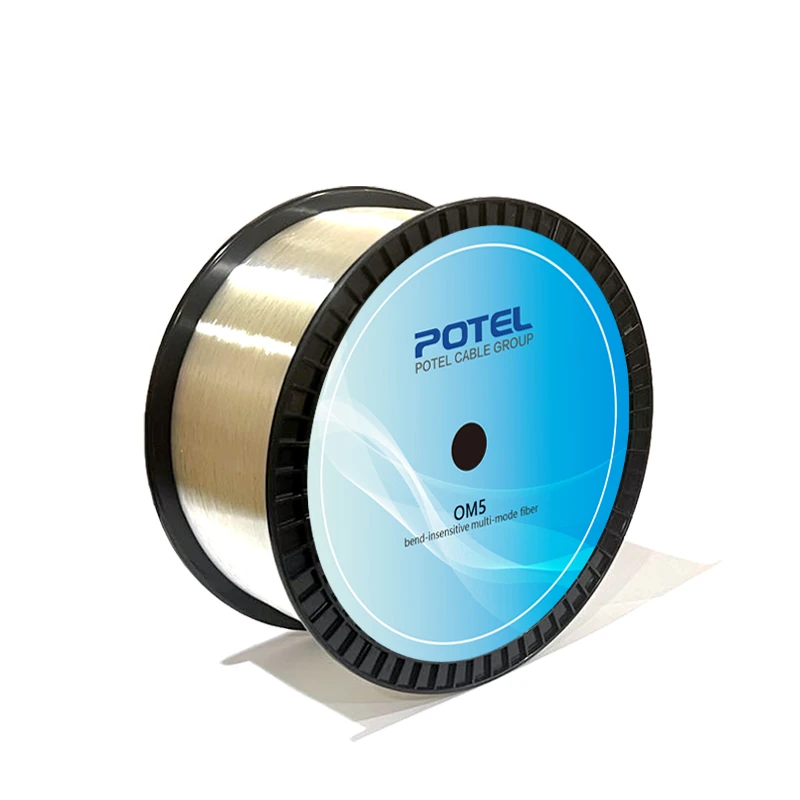
Multi - mode optical fiber is designed to carry multiple light rays (modes) simultaneously. It has a larger core diameter compared to single - mode optical fiber, which allows for easier coupling of light sources such as light - emitting diodes (LEDs) and vertical - cavity surface - emitting lasers (VCSELs). There are different types of multi - mode optical fiber, including Om5 Bend - insensitive Multi - mode Fiber, Om2 Bend - insensitive Multi - mode Fiber, and Om4 Bend - insensitive Multi - mode Fiber. These fibers are commonly used in local area networks (LANs), data centers, and other short - to - medium - distance applications.
Comparing Multi - Mode Optical Fiber with Other Transmission Media
Copper Cables
Copper cables, such as twisted - pair cables and coaxial cables, have been a staple in data transmission for many years. They are relatively inexpensive and easy to install. However, when it comes to latency, copper cables have some limitations.
The propagation speed of electrical signals in copper cables is slower than the speed of light in optical fiber. Electrical signals in copper typically travel at about 60 - 70% of the speed of light in a vacuum. In contrast, light in multi - mode optical fiber travels at approximately 70 - 80% of the speed of light in a vacuum. This means that for the same distance, a signal will take less time to travel through multi - mode optical fiber than through copper cables.
Moreover, copper cables are more susceptible to electromagnetic interference (EMI) and radio - frequency interference (RFI). These interferences can cause signal distortion and additional processing delays as the receiving end has to correct the errors. Multi - mode optical fiber, on the other hand, is immune to EMI and RFI, resulting in a more reliable and lower - latency transmission.
Single - Mode Optical Fiber
Single - mode optical fiber is another type of optical fiber that is often used for long - distance communication. It has a much smaller core diameter than multi - mode optical fiber, which allows only one mode of light to propagate.
In terms of latency, single - mode optical fiber generally has lower latency for very long distances. Since it has less modal dispersion (the spreading of light pulses due to different modes traveling at different speeds), the signal can travel further without significant degradation. However, for short - to - medium - distance applications (up to a few hundred meters), the difference in latency between single - mode and multi - mode optical fiber is negligible.
Multi - mode optical fiber is more cost - effective for short - range applications. The light sources used with multi - mode fiber, such as VCSELs, are less expensive than the lasers required for single - mode fiber. Additionally, the installation of multi - mode fiber is often simpler and less expensive due to the larger core diameter, which makes it easier to align connectors.
Wireless Transmission
Wireless transmission media, such as Wi - Fi and cellular networks, offer the advantage of mobility. However, they are also prone to high latency.
Wireless signals have to traverse through the air, which can be affected by various factors such as obstacles, interference from other wireless devices, and the distance between the transmitter and the receiver. The signal strength can degrade rapidly, and the need for error - correction and retransmission can significantly increase latency.
In contrast, multi - mode optical fiber provides a dedicated and stable transmission path. The signal is confined within the fiber, and there is no need to deal with the uncertainties associated with the wireless environment. This results in a more predictable and lower - latency transmission.
Factors Affecting Latency in Multi - Mode Optical Fiber
While multi - mode optical fiber generally offers low latency, there are still some factors that can affect its performance.
Modal Dispersion
As mentioned earlier, modal dispersion is the spreading of light pulses due to different modes traveling at different speeds within the fiber. This can cause the signal to become distorted over distance, which may require additional processing at the receiving end to recover the original data. However, modern multi - mode fibers, such as Om4 and Om5, have been designed to reduce modal dispersion, resulting in lower latency and higher bandwidth.
Connector Loss
Connectors are used to join different sections of fiber optic cables. Poorly installed or low - quality connectors can cause signal loss and reflection, which can increase latency. It is essential to use high - quality connectors and ensure proper installation to minimize these effects.

Fiber Length
The length of the multi - mode optical fiber can also affect latency. As the signal travels through the fiber, it experiences some attenuation and dispersion. For longer fiber lengths, these effects can become more pronounced, and additional amplification or signal - conditioning may be required, which can add to the latency.
Applications Where Low Latency of Multi - Mode Optical Fiber Shines
Data Centers
In data centers, low latency is crucial for applications such as virtualization, cloud computing, and high - performance computing. Multi - mode optical fiber can provide the high - speed, low - latency connectivity required for servers, storage systems, and network switches to communicate efficiently. It allows for quick data transfer between different components, reducing the overall response time of the data center.
Local Area Networks (LANs)
In corporate and educational LANs, multi - mode optical fiber can support a large number of users and devices. It enables fast and reliable data transmission for applications such as file sharing, video streaming, and voice over IP (VoIP). The low latency ensures a smooth user experience, especially for real - time applications.
Conclusion
In conclusion, multi - mode optical fiber offers several advantages in terms of latency compared to other transmission media. It provides a cost - effective, reliable, and low - latency solution for short - to - medium - distance applications. While it may not be the best choice for extremely long - distance communication like single - mode fiber, or offer the mobility of wireless transmission, its performance in terms of latency is superior to copper cables and wireless media for many applications.
If you are looking for a high - quality multi - mode optical fiber solution for your network, we are here to help. Our team of experts can provide you with the best advice and products to meet your specific needs. Whether you need Om5 Bend - insensitive Multi - mode Fiber, Om2 Bend - insensitive Multi - mode Fiber, or Om4 Bend - insensitive Multi - mode Fiber, we have the expertise and the products to ensure a seamless and low - latency network. Contact us today to start the procurement and洽谈 process.
References
- Grobe, D. (2017). Fiber Optics for Dummies. Wiley.
- Stallings, W. (2018). Data and Computer Communications. Pearson.
- ITU - T Recommendations on Optical Fiber Transmission Systems.


